 By admin
 Do You Feel Bloated Almost Every Day? It Could Be One of the First Silent Warning Signs of Ovarian Cancer That Thousands of Women Overlook!
Ovarian cancer is often referred to as a silent disease because its early symptoms are usually vague and can easily be mistaken for digestive issues, hormonal changes, or the natural effects of aging. However, recognizing these warning signs early can make a significant difference in diagnosis and treatment outcomes.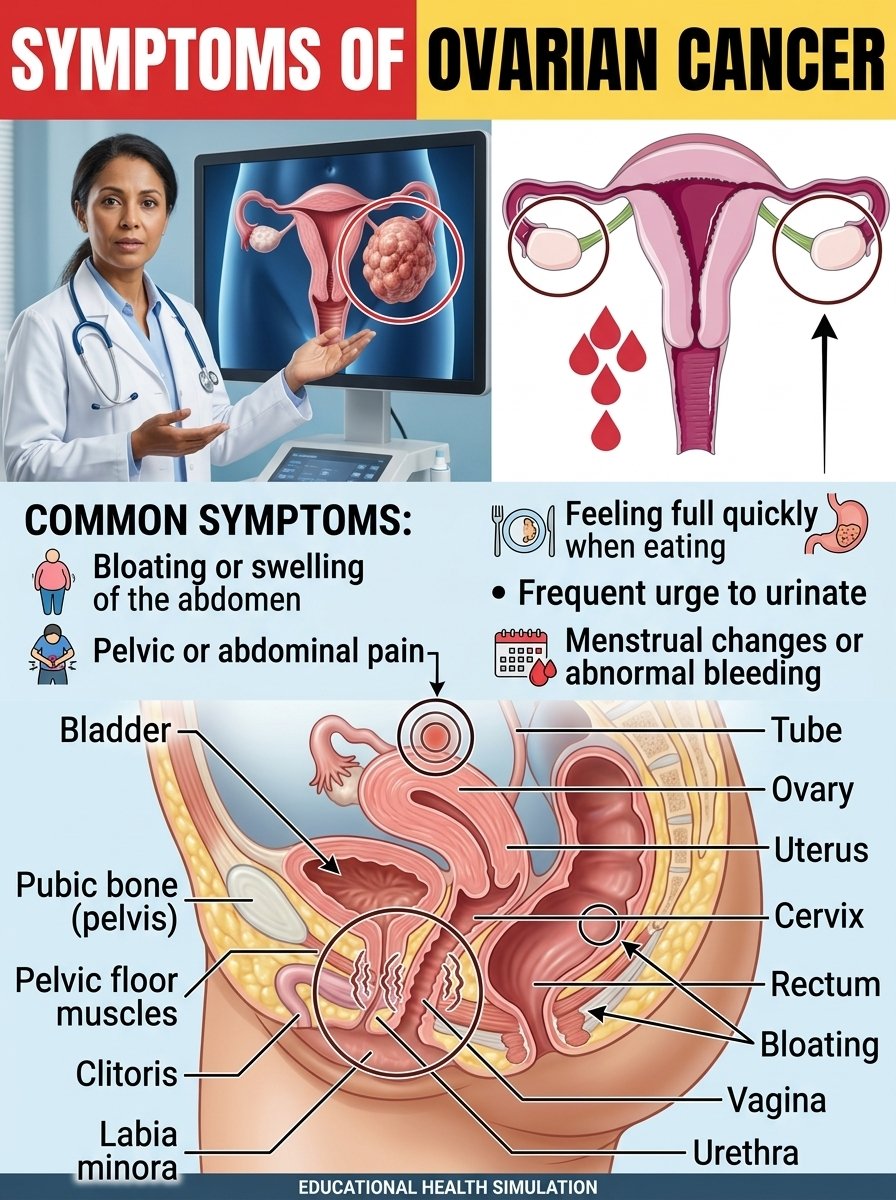
While these symptoms do not always indicate cancer, persistent changes should never be ignored. Here are six common warning signs that many women tend to overlook.
1. Persistent Abdominal Bloating
Feeling bloated occasionally after a large meal is normal. The concern arises when bloating occurs frequently, lasts for weeks, and does not improve despite dietary changes.
Many women describe the sensation as a constant feeling of fullness or an enlarged abdomen. This is one of the most commonly reported symptoms among women diagnosed with ovarian cancer.
2. Pelvic Pain or Pressure
Cramps, lower abdominal discomfort, or a feeling of pressure in the pelvic area may seem like common gynecological issues. However, when the pain becomes persistent or occurs regularly, it deserves medical attention.
The discomfort may begin mildly and gradually worsen over time. Some women also experience lower back pain along with pelvic discomfort.
3. Feeling Full Quickly
Do you find yourself feeling full after eating only a small amount of food? This seemingly minor change can be an important warning sign.
Ovarian cancer may affect the abdominal region, leading to early satiety, reduced appetite, and even unintended weight loss.
4. Changes in Urinary Habits
Frequent urination, a sudden urge to urinate, or increased nighttime bathroom visits may appear to be signs of a urinary tract infection or simply part of aging.
However, when these symptoms persist without an obvious cause, they may be linked to changes occurring in the pelvic region.
5. Unusual Changes in Bowel Habits
Frequent constipation, recurring diarrhea, excessive gas, or sudden changes in bowel movements can also be early warning signs.
Because these symptoms are often associated with common digestive problems, many women delay seeking medical advice. Nevertheless, persistent symptoms should always be evaluated by a healthcare professional.
6. Menstrual Changes or Unexpected Bleeding
Changes in menstrual patterns, bleeding between periods, or any bleeding after menopause should never be ignored.
Although there are many non-cancerous causes for these symptoms, they can also be associated with serious gynecological conditions and should be investigated promptly.
When Should You See a Doctor?
The most important factor is not simply having these symptoms, but how often they occur and whether they persist over time. If any of these symptoms are new, happen regularly for several weeks, or continue to worsen, it is important to seek medical advice.
Early detection significantly increases the chances of successful treatment. Many women live with these subtle symptoms for months, assuming they are caused by stress, digestive issues, or hormonal fluctuations.
Listening to your body is one of the most powerful ways to protect your health. Persistent changes, even small ones, may be valuable warning signs that deserve attention.
Final Thoughts
Ovarian cancer does not always begin with severe symptoms. In many cases, it develops quietly through subtle signs such as persistent bloating, pelvic discomfort, urinary changes, bowel irregularities, loss of appetite, and abnormal bleeding.
Being aware of these symptoms and seeking medical evaluation when necessary can contribute to earlier diagnosis and better treatment outcomes. Knowledge remains one of the most effective tools for protecting women’s health.