 By admin
 ❤️ Shortness of breath, heartburn, and fatigue may be more than everyday problems. They could be the first signs of a silent heart attack!
When most people think of a heart attack, they imagine severe chest pain and an obvious medical emergency. However, not all heart attacks happen that way. There is a condition known as a “silent heart attack,” which can occur with mild, vague, or easily overlooked symptoms.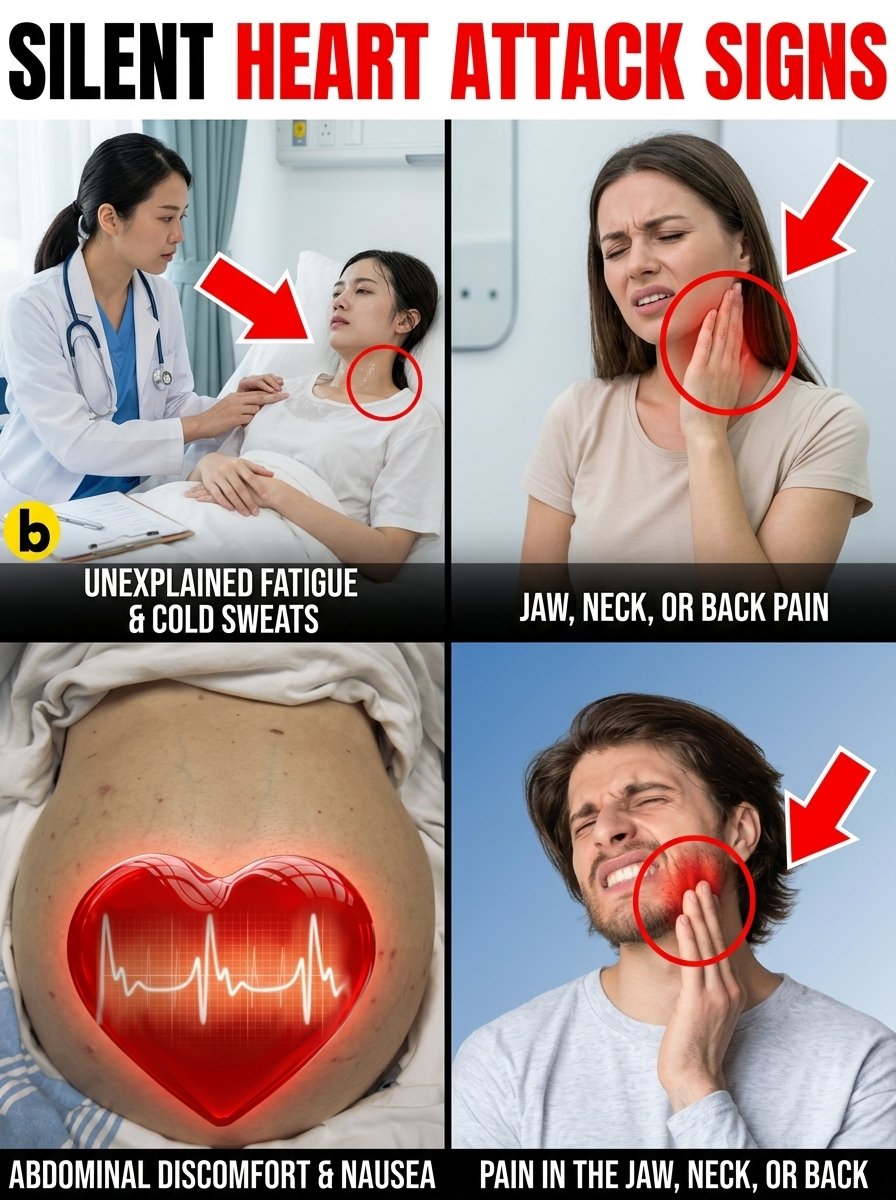
Although it may seem less serious, a silent heart attack can still cause significant damage to the heart and increase the risk of future cardiovascular complications.
Recognizing the early warning signs can make a critical difference in getting medical attention before more serious damage occurs.
1. Unusual Fatigue Without an Obvious Reason
Feeling tired after a busy day is normal. What should raise concern is persistent exhaustion that continues even after getting enough rest.
When the heart cannot pump blood efficiently, muscles and organs receive less oxygen, resulting in ongoing fatigue. Many people blame this symptom on aging, stress, or poor sleep, never realizing it may be related to heart health.
2. Shortness of Breath During Simple Activities
Climbing a few stairs, taking a short walk, or performing everyday tasks should not leave you struggling to breathe.
If you notice that you become breathless more easily than usual or experience unexplained difficulty breathing, it could indicate that your heart is working harder than it should to deliver oxygen throughout the body. This is one of the most common warning signs associated with silent heart attacks.
3. Mild Chest Discomfort
A heart attack does not always cause sudden, intense chest pain. Sometimes it appears as a mild pressure, tightness, heaviness, or discomfort in the center of the chest.
Because the sensation can be subtle, many people mistake it for indigestion, acid reflux, or muscle strain. However, recurring or unexplained chest discomfort should never be ignored.
4. Pain in Unexpected Areas of the Body
Heart-related pain does not always stay in the chest. It can spread to the neck, jaw, shoulders, back, arms, or even the upper abdomen.
Many people seek treatment for muscle pain or digestive issues without realizing that the true source of the discomfort may be the heart. This is one reason silent heart attacks can be especially dangerous.
5. Nausea, Dizziness, or Cold Sweats
Sudden episodes of nausea, dizziness, lightheadedness, or unexplained cold sweats may be important warning signs.
These symptoms are often dismissed as a temporary illness or fatigue, but they can also occur when blood flow to the heart becomes restricted.
6. Persistent Heartburn or Indigestion
One of the most commonly overlooked signs is a burning sensation in the chest, heartburn, or persistent digestive discomfort.
While these symptoms are often linked to digestive problems, they can sometimes be a hidden sign of a heart-related issue. If they occur frequently, especially alongside other symptoms on this list, medical evaluation is strongly recommended.
Why Shouldn’t You Ignore These Signs?
Silent heart attacks can leave scars on the heart muscle and significantly increase the risk of heart failure, irregular heart rhythms, and future heart attacks.
Many people do not realize they have experienced a silent heart attack until weeks or even months later during routine medical examinations.
That is why any persistent, unusual, or recurring symptom deserves attention. Early diagnosis allows healthcare professionals to begin appropriate treatment, manage risk factors, and help protect long-term cardiovascular health.
Taking care of your heart is not only about responding to emergencies. It is also about paying attention to the subtle messages your body sends every day. In many cases, recognizing these warning signs early could save your life.