 By admin
 🚨 Most heart attacks don’t start with crushing chest pain — these 6 silent warning signs could appear weeks earlier.
Most people imagine a heart attack as sudden, crushing chest pain that sends someone collapsing to the floor. But not every heart attack happens that way. In fact, many are “silent” — developing quietly with mild, confusing symptoms that are easy to dismiss as stress, fatigue, aging, or even indigestion.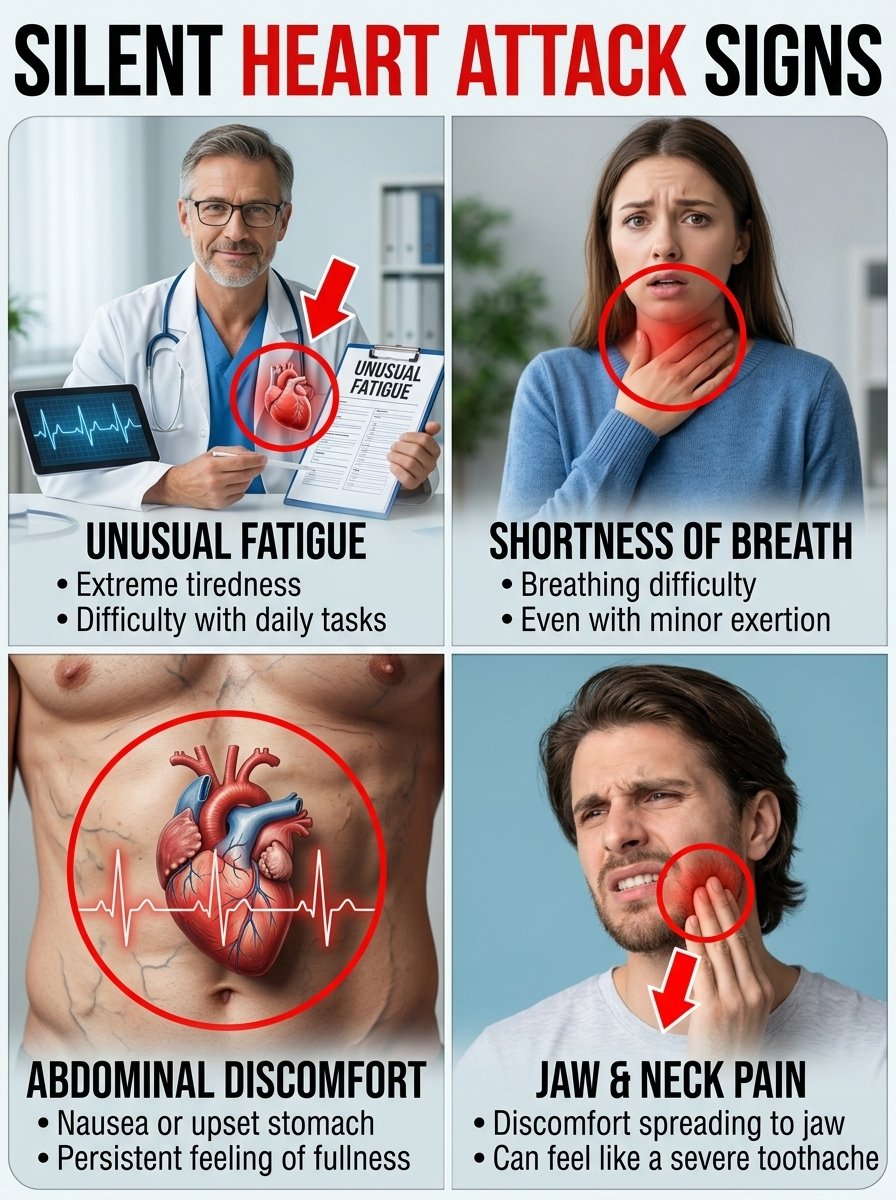
A silent heart attack can damage the heart just as seriously as a major one. The danger is that many people don’t realize what’s happening until permanent damage has already occurred. Recognizing the early warning signs could save your life or the life of someone you love.
1. Unusual Fatigue That Won’t Go Away
One of the earliest and most overlooked signs is extreme tiredness. This isn’t normal fatigue after a busy day. It’s a deep exhaustion that appears suddenly and lingers for days or weeks.
Simple tasks like climbing stairs, carrying groceries, or walking short distances may suddenly feel overwhelming. Your heart may be struggling to pump blood efficiently, reducing oxygen supply throughout the body.
Persistent fatigue, especially when combined with other symptoms, should never be ignored.
2. Mild Chest Pressure or Discomfort
Silent heart attacks often do not cause severe chest pain. Instead, many people experience mild pressure, tightness, fullness, or a squeezing sensation in the chest.
Some describe it as feeling like heartburn, trapped gas, or muscle strain. The discomfort may come and go, making it even easier to dismiss.
Even slight chest discomfort deserves medical attention if it appears unexpectedly or occurs during physical activity.
3. Shortness of Breath
Feeling winded while doing normal activities may be your heart asking for help. If you suddenly struggle to breathe while walking, lying down, or doing routine tasks, it may indicate reduced blood flow to the heart.
Some people notice they cannot catch their breath even without chest pain. This symptom is especially common in older adults and women.
Ignoring breathing difficulties can allow heart damage to progress silently.
4. Pain in the Jaw, Neck, Back, or Arm
Heart-related pain does not always stay in the chest. It can travel to other parts of the body, especially the left arm, shoulders, neck, jaw, or upper back.
The discomfort may feel dull, aching, tight, or burning. Because the pain appears far from the heart, many people mistake it for arthritis, muscle tension, or dental problems.
Recurring unexplained pain in these areas should be evaluated carefully, especially when paired with fatigue or breathlessness.
5. Nausea, Indigestion, or Stomach Discomfort
Many silent heart attacks are mistaken for digestive issues. Symptoms such as nausea, bloating, stomach pressure, acid reflux, or indigestion can actually be heart-related.
Women are particularly likely to experience these non-traditional symptoms.
If stomach discomfort appears together with sweating, dizziness, fatigue, or chest pressure, seek medical care immediately.
6. Cold Sweats and Sudden Dizziness
Breaking out in cold sweat for no obvious reason can be a serious warning sign. Some people also feel lightheaded, dizzy, weak, or faint.
This happens because the heart may not be pumping enough blood to maintain stable circulation.
Sudden sweating combined with weakness or chest discomfort should never be ignored.
Why Silent Heart Attacks Are So Dangerous
The biggest threat is delayed treatment. Because symptoms seem mild or unrelated to the heart, many people continue with daily life while the heart muscle is being damaged.
Over time, untreated heart attacks can increase the risk of heart failure, irregular heartbeat, stroke, or even sudden death.
The earlier a heart problem is detected, the better the chances of recovery and prevention of long-term complications.
How to Protect Your Heart
Small lifestyle changes can dramatically improve heart health:
- Control blood pressure and blood sugar
- Avoid smoking and excessive alcohol
- Exercise regularly
- Eat more fruits, vegetables, and healthy fats
- Reduce stress and improve sleep quality
- Schedule regular health checkups
Your body often whispers before it screams. Listening to these subtle warning signs may help prevent a medical emergency before it becomes life-threatening.
If you or someone you know experiences several of these symptoms together, don’t wait. Seeking medical attention early could save a life.