 By admin
 🚨 Many Women Ignore This Sign! Yet It Could Be an Early Symptom of Breast Cancer That Appears Without Pain.
Pay Attention to Small Changes in Your Breasts Before It’s Too Late
Many women assume that minor changes in their breasts are simply caused by hormonal fluctuations, fatigue, or their menstrual cycle. However, in some cases, seemingly insignificant changes can be early warning signs of more serious health conditions, including breast cancer.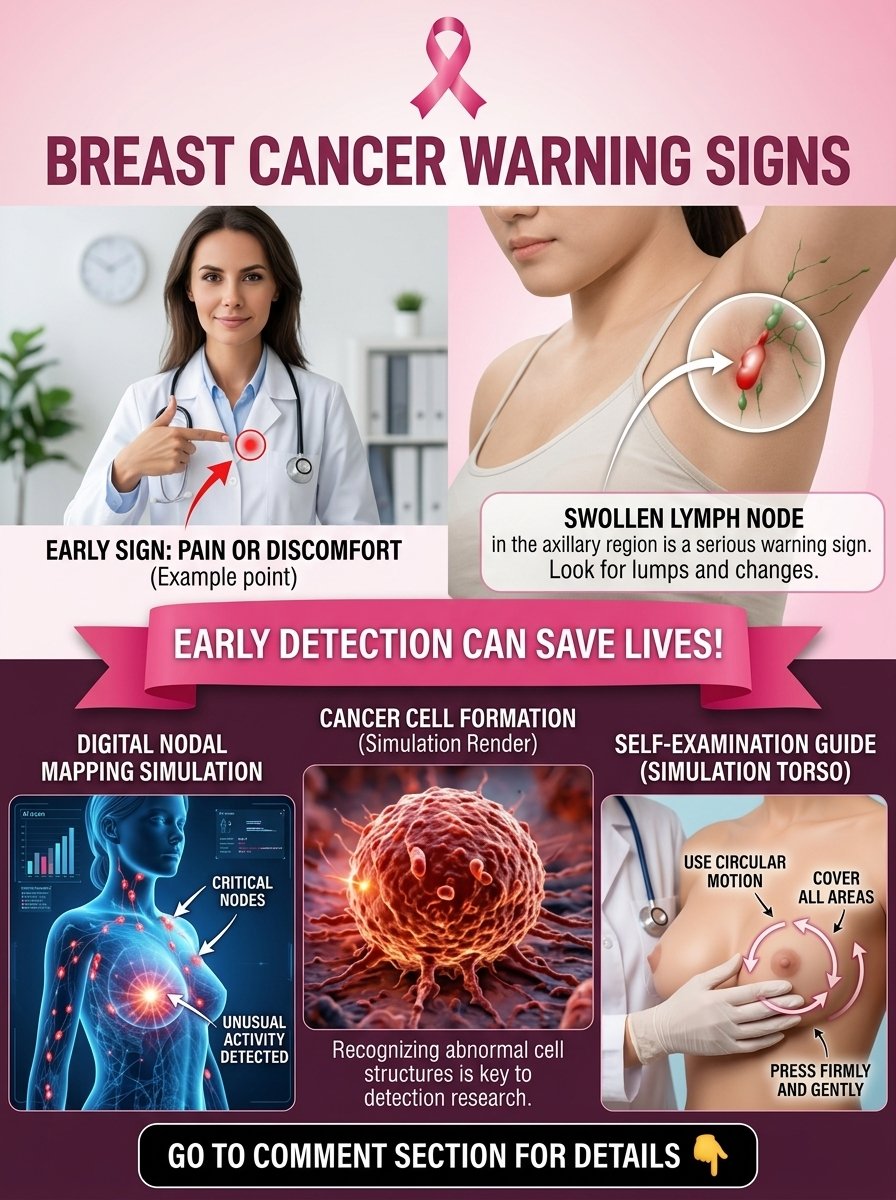
Breast cancer is one of the most common cancers affecting women worldwide. Fortunately, the chances of successful treatment increase significantly when the disease is detected at an early stage. That is why recognizing warning signs early is essential for protecting your health and quality of life.
Why Is Early Detection So Important?
In its early stages, breast cancer often causes no pain and may not produce obvious symptoms. Many cases are only diagnosed after more noticeable changes develop in the breast or surrounding tissues.
By staying aware of changes in your body and scheduling regular health screenings, breast cancer can be identified earlier, allowing for more effective treatment options.
10 Early Warning Signs of Breast Cancer You Should Never Ignore
1. A New Lump in the Breast or Underarm
A lump is one of the most recognized warning signs. Concerning lumps are often hard, have irregular borders, and do not move easily when touched. While not every lump is cancerous, any new lump should be evaluated by a healthcare professional.
2. Unusual Nipple Discharge
If fluid comes out of the nipple without squeezing, especially if it is bloody or has an unusual color, medical attention is recommended.
3. Sudden Inward Turning of the Nipple
A nipple that was previously normal but suddenly becomes inverted may indicate an underlying problem that requires further evaluation.
4. Changes in Breast Size or Shape
Pay attention if one breast suddenly appears larger, smaller, or noticeably different in shape without an obvious reason. Persistent changes should not be ignored.
5. Dimpling or Wrinkling of the Breast Skin
Skin that appears puckered, dimpled, or resembles the texture of an orange peel may signal changes occurring beneath the surface.
6. Unexplained Redness or Swelling
Persistent redness, warmth, or swelling in the breast can be a sign of a serious condition and should be checked by a doctor.
7. Breast Pain That Does Not Go Away
Although breast pain is often related to hormonal changes, pain that persists and is unrelated to the menstrual cycle deserves medical attention.
8. Thickening of Breast Tissue
If an area of the breast feels thicker or different from the surrounding tissue, further examination may be necessary.
9. Changes in the Skin of the Nipple
Nipple skin that becomes flaky, thickened, itchy, or eczema-like may indicate abnormalities that should be evaluated.
10. Swollen Lymph Nodes
Swelling of lymph nodes in the armpit or around the collarbone can sometimes occur before a breast lump becomes noticeable. This symptom should not be overlooked.
Factors That May Increase the Risk of Breast Cancer
Several factors can increase the risk of breast cancer, including:
- Being over 40 years old
- Having a family history of breast cancer
- Certain genetic mutations
- Dense breast tissue
- A sedentary lifestyle
- Being overweight after menopause
How to Support Breast Health
To help detect changes early and maintain breast health:
- Perform regular breast self-examinations each month
- Follow your doctor’s recommendations for screenings
- Keep track of any changes you notice
- Maintain a healthy diet and active lifestyle
- Discuss your family medical history with your healthcare provider
When Should You See a Doctor Immediately?
Seek medical attention promptly if you experience:
- A new lump that does not disappear
- Bloody nipple discharge
- Sudden nipple inversion
- Increasing redness or swelling
- Swollen lymph nodes in the armpit
Conclusion
Learning to recognize the early warning signs of breast cancer is not about living in fear—it is about taking control of your health. The earlier a change is detected, the greater the opportunity for timely diagnosis and appropriate treatment.
Listen to your body, stay informed, and never ignore unusual changes. Early detection can make a significant difference.