 By admin
 🚨 Your stool may be revealing hidden gut problems before symptoms even appear! Discover the 7 types of the Bristol Stool Chart and what they say about your health.
Many people overlook one of the most important signals their body sends every day: their stool. While it may seem like an uncomfortable topic, paying attention to the shape, consistency, and even color of your bowel movements can provide valuable insights into your digestive health, gut function, and potential health concerns that deserve attention.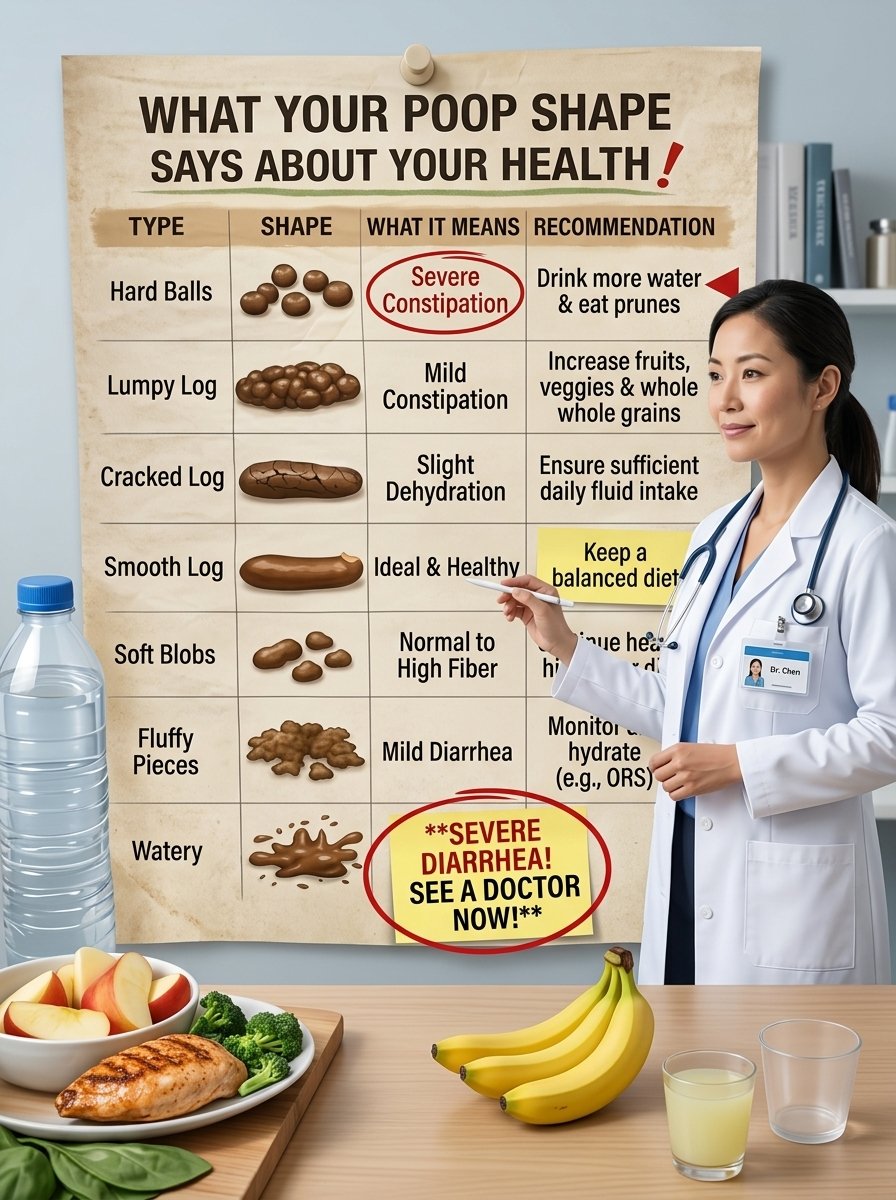
The Bristol Stool Chart is a widely used medical tool that classifies stool into seven different types. Each type can reveal how well your digestive system is functioning and whether there may be imbalances related to diet, hydration, or overall gut health.
Type 1: Separate Hard Lumps
Stool appears as small, hard pellets that are difficult to pass.
This pattern is commonly associated with severe constipation. It may indicate that waste has remained in the colon for too long, causing excessive water absorption and hardening. Low fluid intake, insufficient fiber consumption, and a sedentary lifestyle are often contributing factors.
Type 2: Sausage-Shaped but Lumpy
The stool forms a single mass but has a rough, lumpy appearance.
This type also suggests constipation. The digestive system is moving waste more slowly than normal, making elimination more difficult.
Type 3: Sausage-Shaped with Cracks
The stool is elongated with visible cracks on its surface.
This is considered one of the healthier stool patterns. It usually indicates balanced intestinal transit and adequate hydration.
Type 4: Smooth, Soft, and Snake-Like
The stool is smooth, soft, and easy to pass.
According to health experts, this is the ideal stool type. It is often associated with a fiber-rich diet, proper hydration, and a healthy digestive system.
Type 5: Soft Blobs with Clear Edges
The stool appears in soft pieces with well-defined edges.
Although not classified as diarrhea, this type may indicate a lack of dietary fiber. In some individuals, it can also suggest mild intestinal sensitivity.
Type 6: Mushy Stool with Ragged Edges
The stool has a fluffy, mushy appearance with irregular edges.
This usually indicates rapid intestinal transit. Stress, mild infections, food intolerances, or imbalances in the gut microbiome may be contributing factors.
Type 7: Entirely Liquid Stool
There are no solid pieces present.
This pattern is classified as diarrhea. When it persists for several days, it can increase the risk of dehydration and may indicate infections, intestinal inflammation, or other digestive conditions that require medical evaluation.
Stool Color Matters Too
In addition to shape and consistency, stool color can provide important clues about your health:
- Brown: Considered normal and healthy.
- Green: May result from eating green vegetables or rapid intestinal transit.
- Yellow: Can indicate difficulty digesting fats.
- Red: May be caused by certain foods or the presence of blood.
- Black: Can occur due to iron supplements, certain medications, or digestive tract bleeding.
- Pale or Clay-Colored: May indicate problems related to bile production or bile flow.
How to Improve Gut Health
Simple lifestyle habits can help maintain healthy bowel movements and support optimal digestive function:
✔ Drink plenty of water throughout the day.
✔ Eat fruits, vegetables, legumes, and whole grains rich in fiber.
✔ Stay physically active on a regular basis.
✔ Limit the consumption of ultra-processed foods.
✔ Get quality sleep and manage stress effectively.
✔ Monitor persistent changes in your bowel habits.
Your digestive system serves as a powerful indicator of your overall health. Frequent changes in stool shape, consistency, or color may be early warning signs of digestive imbalances. Paying attention to these simple details can help identify potential issues before they become more serious and contribute to a healthier, more active life.