 By admin
 Your body may be warning you about diabetes every single night… and most people ignore the signs until it’s too late.
Diabetes often develops quietly, but your body may send warning signals while you sleep. Many people dismiss these symptoms as stress, aging, or poor sleep habits, not realizing they could be linked to unstable blood sugar levels. Recognizing these nighttime signs early may help prevent serious complications such as nerve damage, kidney problems, heart disease, and vision loss.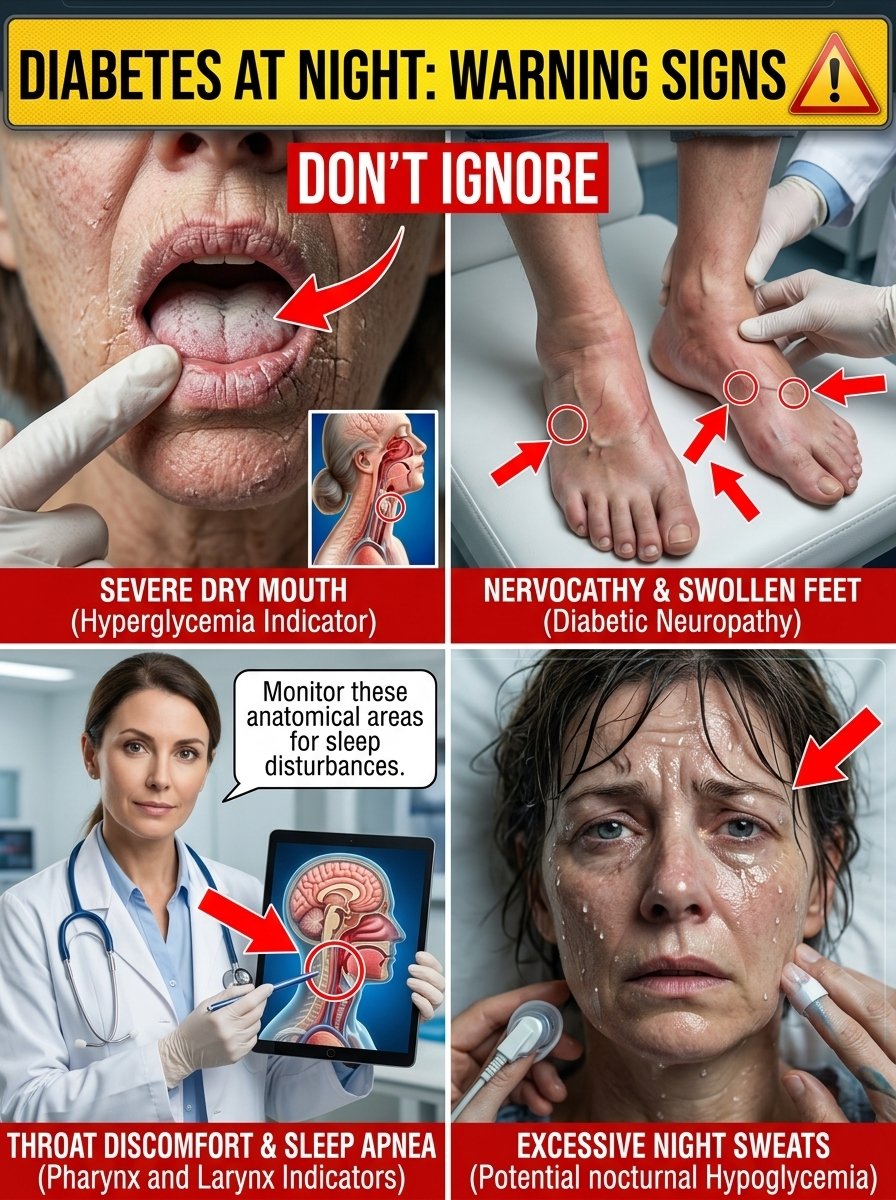
Here are seven dangerous nighttime symptoms that could indicate diabetes or uncontrolled blood sugar.
1. Frequent Urination During the Night
One of the earliest and most common signs of diabetes is waking up several times to urinate. When blood sugar levels become too high, the kidneys work overtime to remove excess glucose through urine. This process pulls more water from the body, leading to constant nighttime bathroom trips.
If you regularly wake up two or more times every night to urinate, especially along with excessive thirst, your body may be struggling to regulate blood sugar properly.
2. Extreme Nighttime Thirst
Persistent thirst during the night can be another major red flag. High blood sugar causes dehydration because the body loses large amounts of fluid through frequent urination. Many people with undiagnosed diabetes wake up with a dry mouth, sore throat, or an overwhelming urge to drink water.
This cycle of thirst and urination can seriously disturb sleep quality and leave you exhausted the next morning.
3. Night Sweats Without Explanation
Waking up drenched in sweat may not always be caused by hot weather or heavy blankets. Sudden drops in blood sugar during sleep, known as nocturnal hypoglycemia, can trigger excessive sweating, shakiness, rapid heartbeat, and anxiety.
These episodes are particularly dangerous because they may happen silently while you sleep. Severe nighttime hypoglycemia can even become life-threatening if left untreated.
4. Burning, Tingling, or Numb Feet
Diabetes can damage nerves over time, especially in the feet and legs. Many people first notice these symptoms at night when the body is resting and distractions disappear.
You may feel:
- Tingling sensations
- Burning pain
- Sharp electric-like shocks
- Numbness in the toes or feet
This condition, called diabetic neuropathy, is often a warning sign that blood sugar has remained uncontrolled for a long period.
5. Sudden Leg Cramps During Sleep
Painful leg cramps that wake you up in the middle of the night may be linked to poor circulation and nerve damage caused by diabetes. High glucose levels can affect blood flow to the muscles, increasing the risk of spasms and discomfort.
If nighttime cramps happen frequently along with fatigue or tingling sensations, it may be time to check your blood sugar levels.
6. Loud Snoring and Sleep Apnea
Many people with diabetes also suffer from sleep apnea, a condition where breathing repeatedly stops and starts during sleep. Symptoms include loud snoring, choking sounds, gasping for air, and waking up feeling exhausted even after a full night in bed.
Sleep apnea can worsen insulin resistance and increase the risk of heart disease, stroke, and high blood pressure. The connection between poor sleep and diabetes is stronger than many people realize.
7. Constant Hunger at Night
Do you often crave food late at night even after eating dinner? Uncontrolled diabetes can prevent glucose from entering the cells properly, leaving the body starved for energy. As a result, the brain keeps sending hunger signals.
Nighttime cravings for sweets or carbohydrates may indicate unstable blood sugar levels, especially when combined with fatigue, weight changes, or excessive thirst.
Why These Symptoms Matter
Ignoring nighttime signs of diabetes can allow the disease to progress silently for years. Over time, high blood sugar may damage the nerves, eyes, kidneys, blood vessels, and heart. Early detection is critical because lifestyle changes and proper treatment can dramatically reduce complications.
Healthy habits that may help support blood sugar control include:
- Reducing sugary and processed foods
- Eating more fiber-rich vegetables
- Staying physically active
- Maintaining a healthy weight
- Getting quality sleep
- Drinking enough water
- Monitoring blood glucose regularly
If you experience several of these symptoms consistently, consider speaking with a healthcare professional and getting tested. Sometimes the body whispers before it screams — and nighttime symptoms may be the first warning you receive.