 By admin
 “Feeling bloated, tired, or losing weight without reason? Your body might be sending dangerous signals you should never ignore.”
Stomach cancer often develops quietly, with symptoms that many people mistake for ordinary digestive problems. Because the warning signs can appear subtle at first, countless individuals ignore them until the disease has already progressed. Recognizing these early clues may help increase the chances of timely treatment and better recovery outcomes.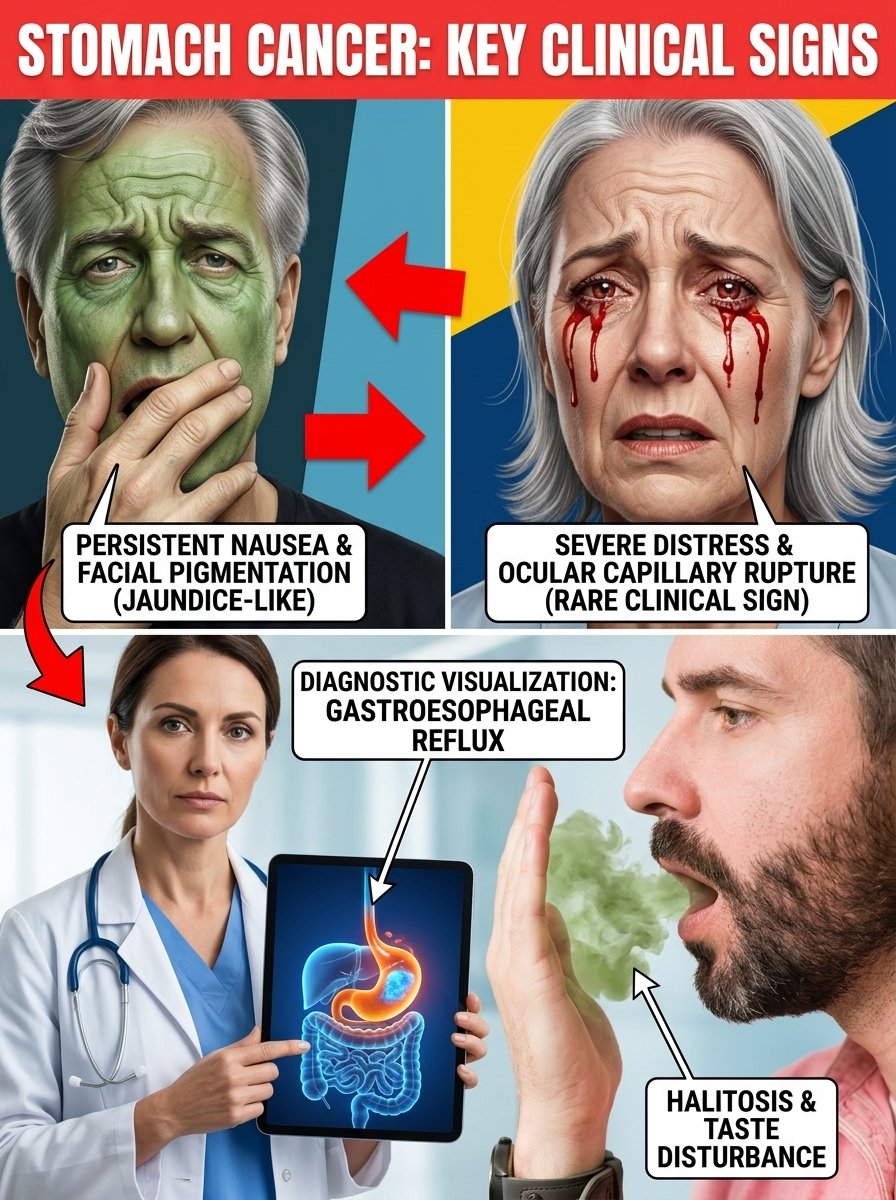
Here are eight strange but important signs your body may be sending.
1. Persistent Bloating After Small Meals
Feeling unusually full after eating only a small amount of food could be more than simple indigestion. Many people with stomach cancer report persistent bloating, pressure, or discomfort shortly after meals. When the stomach lining becomes affected, digestion may slow down and create a constant sensation of heaviness.
If bloating continues for weeks and does not improve with dietary changes, it deserves medical attention.
2. Unexplained Weight Loss
Sudden weight loss without exercise or dieting is one of the most alarming warning signs linked to several serious illnesses, including stomach cancer. Cancer cells can interfere with the body’s metabolism, reduce appetite, and drain energy reserves.
Losing weight unexpectedly while also experiencing fatigue or digestive discomfort should never be ignored.
3. Ongoing Stomach Pain or Burning
A dull ache, burning sensation, or persistent pain in the upper abdomen may appear similar to acid reflux or gastritis. However, when the discomfort becomes frequent or progressively worse, it could indicate deeper problems inside the stomach lining.
Pain that repeatedly returns after eating or wakes you at night should be evaluated by a healthcare professional.
4. Constant Nausea or Vomiting
Occasional nausea is common, but repeated episodes without a clear reason can be a warning sign. Some people with stomach cancer experience chronic nausea, vomiting, or even vomiting blood in advanced stages.
When nausea lasts for several weeks, especially alongside appetite loss or abdominal pain, it may indicate a more serious condition.
5. Difficulty Swallowing
Although commonly associated with throat conditions, trouble swallowing can also occur when stomach cancer affects the upper digestive tract. Food may feel stuck, or swallowing may become painful and uncomfortable.
This symptom can gradually worsen over time and should never be dismissed as normal aging.
6. Extreme Fatigue and Weakness
Cancer can slowly rob the body of nutrients and iron, leading to anemia and severe tiredness. Many people notice unusual exhaustion even after adequate sleep or light activity.
When fatigue becomes overwhelming and is combined with pale skin, dizziness, or shortness of breath, it may signal internal bleeding or nutritional deficiencies linked to stomach disease.
7. Dark or Bloody Stool
Changes in stool color may reveal hidden bleeding inside the digestive tract. Black, tar-like stools can indicate blood that has been digested after bleeding in the stomach.
This symptom requires immediate medical attention because internal bleeding can become dangerous if untreated.
8. Loss of Appetite
A sudden lack of interest in food is another overlooked warning sign. Many stomach cancer patients report feeling full quickly or having no desire to eat at all.
This loss of appetite may gradually lead to weakness, malnutrition, and significant weight loss over time.
Why Early Detection Matters
Stomach cancer can become life-threatening when discovered late, but early diagnosis may greatly improve treatment success. Paying attention to persistent digestive symptoms and unusual body changes can make a critical difference.
While these symptoms do not always mean cancer, ignoring them for months can delay proper care. Listening to your body and seeking medical advice early may help protect your long-term health.
Simple lifestyle habits such as eating nutrient-rich foods, avoiding smoking, limiting alcohol, managing stress, and scheduling regular health checkups can also support digestive health and reduce certain risk factors.
Your body often whispers before it screams. Never ignore the warning signs.