 By admin
 🚨 Kidney problems don’t always start with pain. These 3 popular nuts may overload your kidneys and spike creatinine levels faster than you think!
When creatinine levels begin to rise, your kidneys may no longer filter waste and minerals efficiently. Many people immediately focus on reducing salt or sugar, but one commonly overlooked food group can quietly add extra stress to the kidneys: nuts.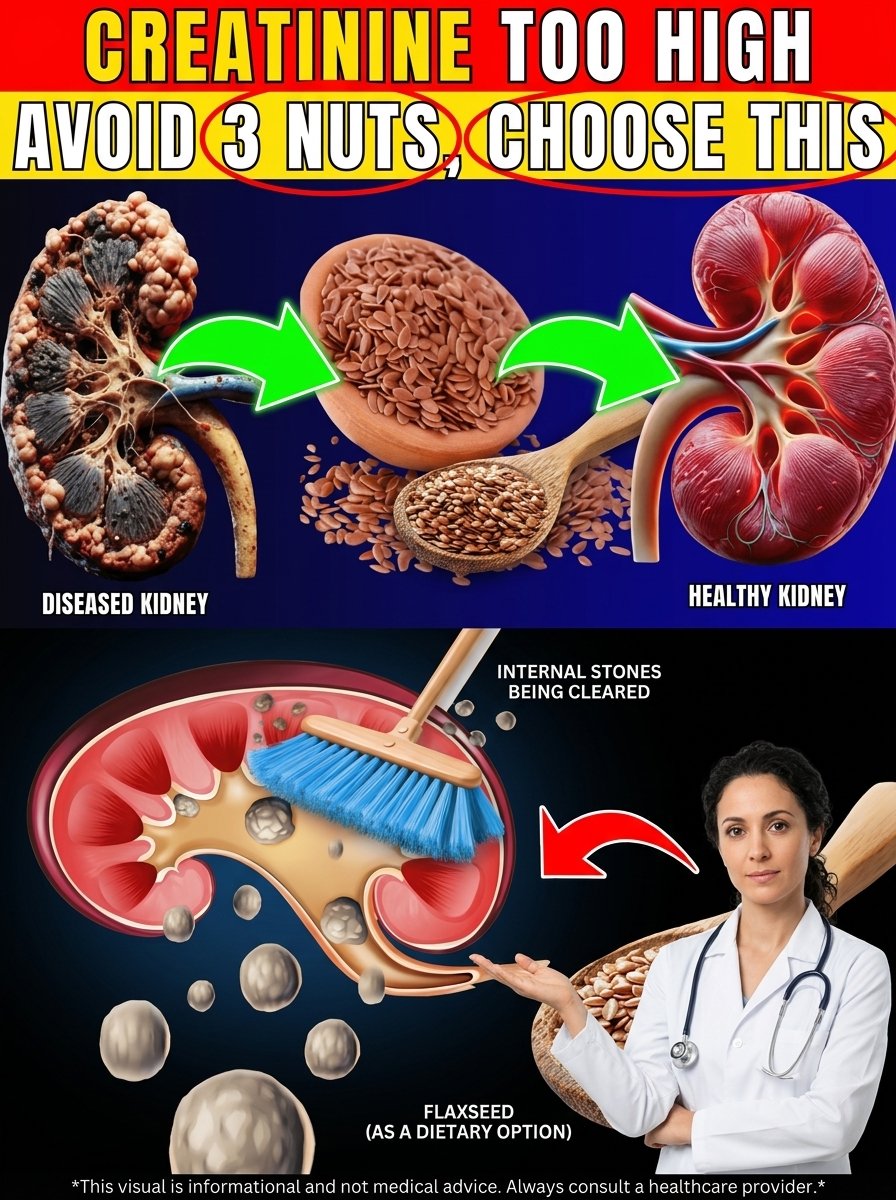
Nuts are often promoted as healthy snacks packed with protein, fiber, and heart-friendly fats. However, not all nuts are ideal for people dealing with kidney problems or elevated creatinine levels. Some varieties contain large amounts of phosphorus and potassium — two minerals that weakened kidneys may struggle to remove from the body. Over time, excessive intake can worsen mineral imbalance, increase kidney workload, and contribute to complications affecting the heart and bones.
The good news is that you do not necessarily need to eliminate nuts completely. The key is knowing which ones to avoid and which options are generally gentler on the kidneys.
1. Cashews: Small Snack, Heavy Kidney Burden
Cashews may look harmless, but they are surprisingly dense in phosphorus and potassium. Just a small handful can significantly increase your daily mineral intake. For individuals with impaired kidney function, this can become problematic because excess phosphorus may build up in the blood and weaken bones while increasing cardiovascular risk.
Cashews are also easy to overeat because of their creamy texture and addictive flavor. Salted versions are even worse due to their high sodium content, which may contribute to fluid retention and high blood pressure — two major concerns for kidney health.
If your creatinine is elevated, limiting cashews is often a smart first step.
2. Almonds: Healthy for Many, Risky for Some
Almonds are frequently labeled as a “superfood,” but they may not be the best choice for people with kidney concerns. They contain relatively high levels of potassium and phosphorus, and they are also rich in oxalates, compounds associated with kidney stone formation in susceptible individuals.
For healthy individuals, this usually is not a problem. But when kidney function declines, excess potassium can accumulate in the bloodstream. In severe cases, high potassium levels may interfere with heart rhythm and become dangerous.
Almond butter, almond flour, and almond milk with phosphate additives can increase intake even more without people realizing it.
3. Pistachios: The Hidden Potassium Bomb
Pistachios are another nut that kidney patients should consume cautiously. Compared with many other nuts, pistachios contain especially high potassium levels. Some sources report nearly 300 mg of potassium in just one ounce.
For people with chronic kidney disease or rising creatinine, that amount can add up quickly, especially if pistachios are eaten as a daily snack. Salted pistachios create an additional issue because sodium places extra pressure on the kidneys and blood vessels.
While an occasional small serving may fit into some kidney-friendly diets, frequent consumption can become risky without professional guidance.
Better Nut Choices for Kidney Health
Fortunately, several nuts tend to be lower in phosphorus and potassium and may be safer in moderation.
Macadamia Nuts
Macadamia nuts are often considered one of the most kidney-friendly choices. They contain significantly lower phosphorus and potassium levels compared with almonds, cashews, and pistachios.
They are also rich in healthy monounsaturated fats that support heart health — an important benefit because kidney disease and cardiovascular disease are closely connected.
Pecans
Pecans are another gentler option for people monitoring creatinine levels. They provide satisfying flavor and healthy fats while remaining relatively lower in problematic minerals.
Unsalted pecans in small portions may work well as an occasional snack.
Walnuts
Walnuts contain moderate mineral levels but offer valuable omega-3 fatty acids and antioxidants that may help reduce inflammation. Some kidney specialists consider them acceptable in controlled amounts, particularly during earlier stages of kidney disease.
The important factor is portion size. Eating large amounts daily can still overload the kidneys.
Portion Control Matters More Than Perfection
Even kidney-friendlier nuts should be eaten carefully. A small serving — roughly one ounce or a quarter cup — is usually enough. Overeating any nut can quickly increase potassium, phosphorus, calories, and sodium intake.
Whenever possible, choose raw or dry-roasted unsalted nuts. Avoid heavily seasoned varieties and flavored nut mixes because many contain hidden phosphate additives and excessive sodium.
It is also important to remember that kidney nutrition is highly individualized. Some people with early-stage kidney disease may tolerate moderate amounts of nuts without issues, while others with advanced disease may need stricter limits.
Final Thoughts
High creatinine levels are often a warning sign that your kidneys need extra support. While nuts are nutritious foods, certain varieties can quietly increase the burden on weakened kidneys due to their phosphorus and potassium content.
If you are trying to protect kidney function, reducing intake of cashews, almonds, and pistachios may help. Choosing lower-mineral options like macadamia nuts, pecans, or controlled portions of walnuts can be a smarter alternative.
Small dietary changes repeated consistently over time can make a meaningful difference in supporting kidney health and maintaining better mineral balance naturally.