 By admin
 ⚠️ Your swollen feet may NOT be from aging… it could be a hidden side effect of your blood pressure medicine. Discover the 10 warning signs doctors rarely explain.
Amlodipine is one of the most commonly prescribed medications for high blood pressure and chest pain. For many people, it works extremely well and helps reduce the risk of heart attacks and strokes. However, like any medication, it can also cause side effects that often go unnoticed or are mistaken for aging, stress, or unrelated health problems.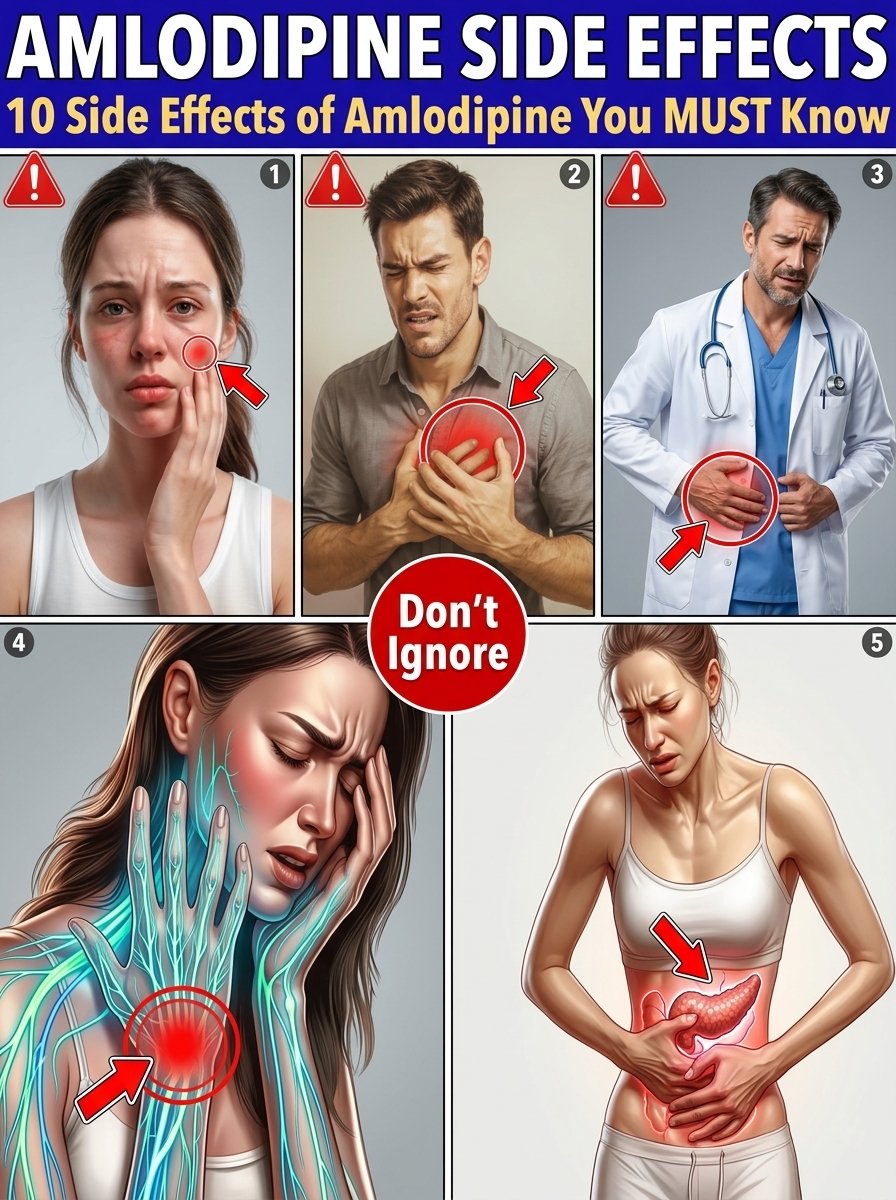
Some reactions are mild and temporary, while others may signal that your body is not tolerating the medication properly. Understanding these lesser-known effects can help you recognize warning signs early and discuss safer options with your healthcare provider.
1. Swollen Feet and Ankles
One of the most common yet underestimated side effects of amlodipine is swelling in the feet, ankles, or lower legs. This happens because the medication relaxes blood vessels, allowing fluid to leak into surrounding tissues.
Many people assume the swelling comes from standing too long, hot weather, or getting older. In reality, the medication itself may be responsible. The swelling is often worse at higher doses and may become uncomfortable over time.
2. Extreme Fatigue
Some users report feeling unusually tired after starting amlodipine. This fatigue can appear as low energy, weakness, or a constant feeling of exhaustion even after a full night’s sleep.
Because the medication lowers blood pressure, some people experience reduced circulation and lower energy levels. The body may eventually adjust, but persistent fatigue should never be ignored.
3. Dizziness and Lightheadedness
Feeling dizzy when standing up quickly is another hidden issue many patients experience. A sudden drop in blood pressure can temporarily reduce blood flow to the brain, leading to faintness or balance problems.
Older adults are particularly vulnerable because dizziness increases the risk of dangerous falls and injuries.
4. Rapid Heartbeat or Palpitations
Although amlodipine is designed to help the heart, some people notice fluttering sensations, pounding heartbeats, or a racing pulse shortly after taking it.
This reaction can feel alarming and may trigger anxiety. In some cases, the heart speeds up to compensate for changes in blood vessel pressure.
5. Facial Flushing and Heat Sensations
A warm, red face may seem harmless, but many people taking amlodipine experience sudden flushing episodes. This occurs because blood vessels widen, increasing blood flow near the skin’s surface.
Some patients describe it as feeling overheated or unusually sensitive to warm temperatures.
6. Gum Overgrowth
A surprisingly little-known side effect of amlodipine is gum enlargement, also called gingival overgrowth. The gums may become swollen, tender, or grow over parts of the teeth.
This side effect can make brushing and flossing difficult and may increase the risk of dental infections if not addressed early.
7. Digestive Problems
Amlodipine can sometimes irritate the digestive system. Common complaints include nausea, stomach discomfort, constipation, acid reflux, or bloating.
Because these symptoms may appear gradually, many people fail to connect them to their blood pressure medication.
8. Brain Fog and Trouble Concentrating
Some users describe feeling mentally “off” after starting the medication. They may struggle with focus, memory, or clear thinking.
Brain fog is not officially discussed as often as other side effects, but many patients report feeling less mentally sharp while taking amlodipine. This can interfere with work, daily tasks, and overall quality of life.
9. Joint and Muscle Pain
Muscle stiffness, aching joints, and unexplained body pain may also occur. These symptoms are often blamed on exercise, arthritis, or aging rather than medication.
In some individuals, the discomfort becomes severe enough to interfere with walking, sleeping, or physical activity.
10. Mood Changes and Anxiety
Certain people experience emotional changes after beginning amlodipine treatment. Anxiety, irritability, nervousness, or feelings of depression have all been reported.
While not everyone reacts this way, changes in circulation and nervous system responses may affect mood in sensitive individuals.
When to Seek Medical Attention
Most side effects are manageable, but some symptoms require immediate medical care. Seek urgent help if you experience:
- Severe chest pain
- Difficulty breathing
- Fainting
- Swelling of the face or throat
- Yellowing of the skin or eyes
- Irregular heartbeat
Never stop taking amlodipine suddenly without medical supervision. Abruptly stopping blood pressure medication can increase the risk of dangerous complications.
Tips to Reduce Side Effects Naturally
If you suspect amlodipine is causing problems, speak with your doctor before making changes. In many cases, symptoms can improve through simple adjustments such as:
- Lowering the dosage
- Taking the medication at a different time of day
- Reducing sodium intake
- Staying hydrated
- Exercising regularly
- Wearing compression socks for swelling
- Switching to an alternative medication if necessary
Keeping a symptom journal can also help identify patterns and make it easier for your doctor to evaluate your reaction.
Final Thoughts
Amlodipine has helped millions of people manage high blood pressure successfully, but it is not completely free of side effects. Some reactions are obvious, while others develop slowly and quietly over time.
Paying attention to changes in your body is important. If something feels unusual after starting the medication, trust your instincts and discuss it with a healthcare professional. Early awareness can prevent minor side effects from becoming serious health concerns.