 By admin
 The part of dragon fruit you always throw away may actually support gut balance, reduce inflammation, and improve overall digestion.
Most people enjoy dragon fruit for its vibrant pink skin and soft, seed-speckled flesh—and then throw the peel straight into the trash without a second thought. Yet this “waste” may actually be one of the most nutrient-dense parts of the fruit.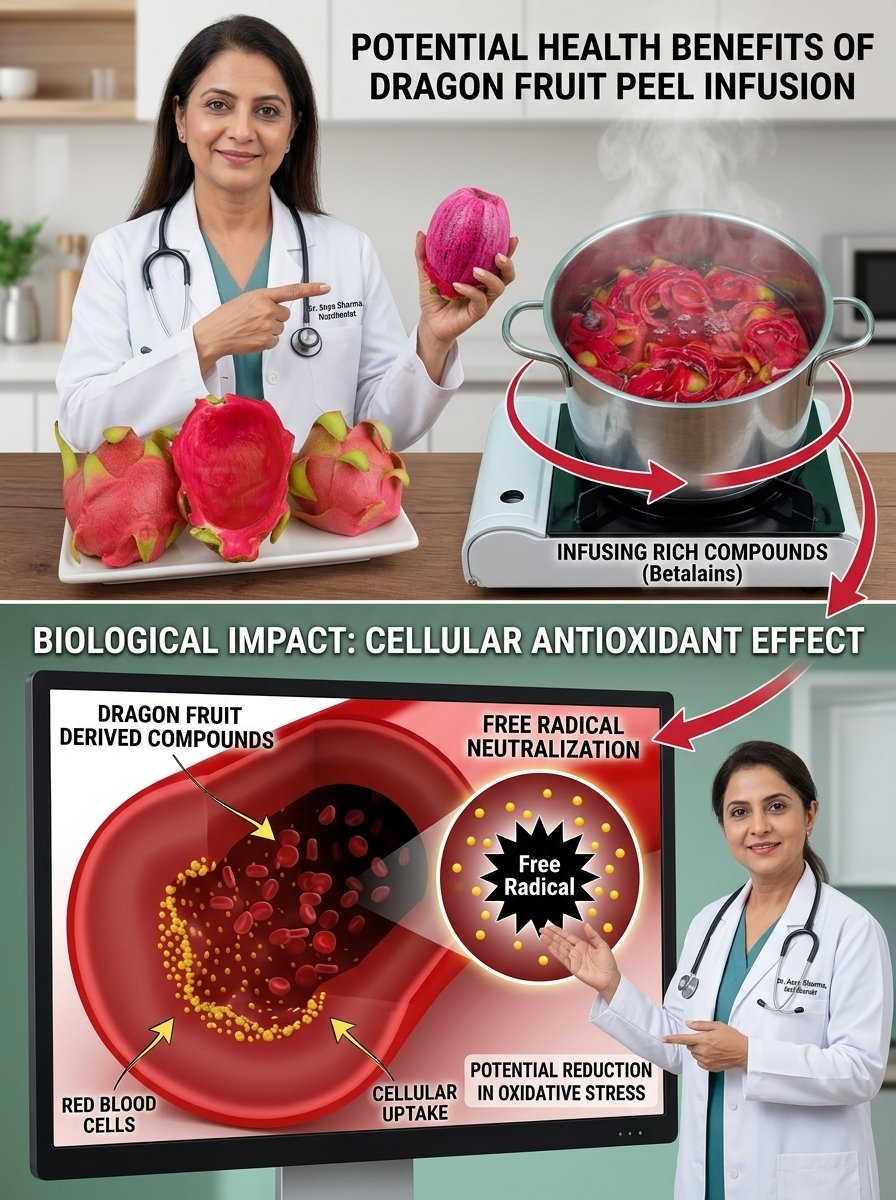
Recent scientific findings and nutrition insights suggest that dragon fruit peel contains a concentrated mix of fiber, antioxidants, and plant compounds that may support gut health, skin vitality, and even energy balance. What was once considered inedible is now being reconsidered as a functional ingredient with real health promise.
A hidden concentration of nutrients
Dragon fruit peel is not just decorative—it is biologically active. It contains high levels of dietary fiber and natural pigments known as betalains and anthocyanins, which are responsible for its deep red or pink color.
These compounds act as antioxidants, helping the body neutralize free radicals—unstable molecules linked to aging, inflammation, and chronic disease. Compared to the flesh, the peel is often significantly richer in these protective substances.
Researchers studying dragon fruit by-products have found that the peel also contains polyphenols and other phytochemicals that may support metabolic health and reduce oxidative stress in the body.
Gut health: feeding the “good bacteria”
One of the most interesting benefits of dragon fruit peel is its impact on the gut microbiome.
Because it is rich in prebiotic fiber, the peel can act as food for beneficial gut bacteria such as Lactobacillus and Bifidobacterium. These microbes play a key role in digestion, immune defense, and even mood regulation.
Studies on dragon fruit peel powder have shown improvements in gut barrier function and microbiota balance in animal models, suggesting that it may help strengthen intestinal integrity and reduce harmful inflammation in the digestive system.
In simpler terms: the peel doesn’t just pass through your system—it may actively help nourish it.
Skin health and anti-aging support
Healthy skin is closely linked to internal nutrition, especially antioxidants and hydration. The compounds in dragon fruit peel—particularly betalains and flavonoids—are known for their ability to reduce oxidative stress, one of the key drivers of premature aging.
By helping protect cells from damage, these antioxidants may support clearer, more resilient skin over time. Combined with the peel’s fiber content, which helps the body eliminate waste more efficiently, it may indirectly contribute to a healthier complexion.
This is why some nutrition researchers now describe dragon fruit peel as a “beauty-from-within” ingredient rather than waste material.
Natural energy and metabolic balance
Energy levels in the body are strongly influenced by gut health, blood sugar stability, and nutrient absorption. The fiber in dragon fruit peel can slow digestion, helping reduce rapid spikes and crashes in blood sugar.
At the same time, antioxidant compounds may support mitochondrial function—the cellular process responsible for energy production. While research is still emerging, early findings suggest that plant-based by-products like dragon fruit peel could play a role in more stable, sustained energy release.
From waste to functional food
Instead of discarding the peel, some food scientists are exploring ways to turn it into functional ingredients such as:
- Natural food coloring
- Fiber-rich powders for smoothies
- Antioxidant-enriched bakery products
- Fermented health supplements
This aligns with a growing global trend of reducing food waste while extracting more nutritional value from fruits and vegetables that are usually discarded.
How it could be used safely
While raw dragon fruit peel is not commonly eaten directly, it can be processed in several ways:
- Dried and ground into powder for smoothies or yogurt
- Used in teas or infused drinks
- Incorporated into baked goods or health bars after processing
However, it is important to note that most of the research so far is still in early stages, often based on laboratory or animal studies. Human clinical evidence is limited, so moderation and proper preparation are key.
Rethinking what “waste” really means
The idea that fruit peels are useless is increasingly being challenged. Dragon fruit peel is a strong example of how parts of food once discarded may actually hold concentrated nutritional value.
With its fiber, antioxidants, and prebiotic potential, it represents a shift in thinking—from consumption to full utilization of natural resources.
What was once thrown away might not just be edible—it might quietly support gut health, skin vitality, and overall energy when used wisely.