 By admin
 Blepharitis, red lids, constant irritation? This gentle traditional remedy is gaining attention for calming eyelid inflammation.
Do your eyes ever feel gritty, tired, or dry by midday? Maybe you wake up with puffy lids, blurred vision, or those annoying floaters drifting across your sight. On a scale of 1–10, how comfortable do your eyes feel right now?
If you’re over 40, chances are you’ve noticed changes. More screen time. More dryness. More irritation. You may have heard that castor oil—an old-fashioned remedy your grandparents trusted—can help. But does it truly work, or is it just hype?
Let’s uncover what castor oil can realistically support, what it cannot, and how to use it safely.
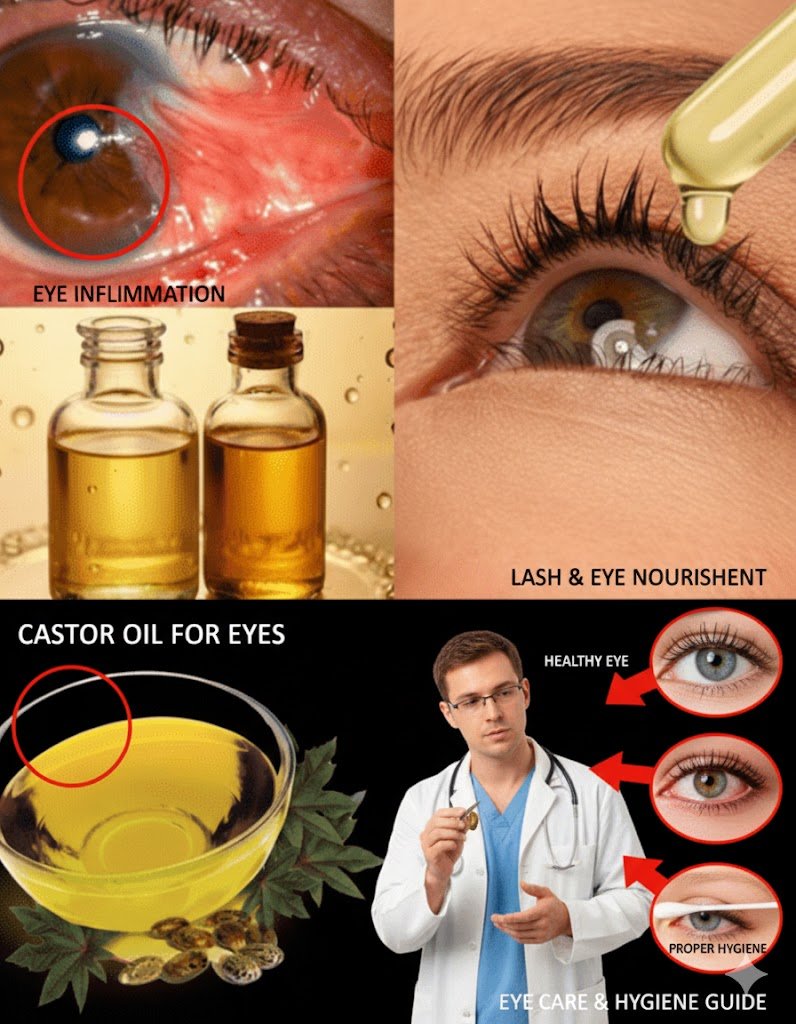
Why Dry Eye and Irritation Are Increasing
As we age, tear production and oil gland function naturally decline. Studies suggest that up to half of adults over 50 experience dry eye symptoms. Burning, redness, fluctuating vision, and fatigue while reading or using screens are common complaints.
Artificial tears help temporarily—but many fail to support the lipid (oil) layer of the tear film. Without that protective layer, tears evaporate too quickly.
This is where castor oil becomes interesting.
What Castor Oil May Help With
1. Supporting Tear Film Stability (When Properly Formulated)
Castor oil contains ricinoleic acid, known for its soothing and anti-inflammatory properties. In specially formulated, diluted, preservative-free eye drops, castor oil has been shown to improve tear film stability and reduce evaporation.
Important: This applies only to professionally formulated ophthalmic products—never raw oil directly in the eye.
2. Meibomian Gland Support
Clogged oil glands along the eyelids are a leading cause of evaporative dry eye. Some research suggests castor oil-based formulations may help improve gland function by enhancing the oil layer of tears.
Healthier glands = more stable moisture.
3. Relief for Blepharitis (Eyelid Inflammation)
One clinical study found that applying cold-pressed castor oil to the eyelid margins twice daily reduced symptoms of blepharitis after several weeks.
When used externally on clean lids, it may:
-
Reduce redness
-
Soothe crusting
-
Improve comfort
Always apply with a sterile cotton swab to closed eyelids—not inside the eye.
4. Puffy Lids and Under-Eye Swelling
Because of its anti-inflammatory nature, castor oil may help reduce mild eyelid swelling when gently massaged around (not into) the eye area.
Evidence here is limited and mostly anecdotal—but some people report smoother, less puffy-looking lids.
5. Lash Health Support
Castor oil has traditionally been used to condition lashes. While it does not medically regrow lashes like pharmaceutical prostaglandins, it may reduce breakage and improve appearance when applied carefully to lash roots.
What Castor Oil Does NOT Help
Let’s clear up common myths.
Cataracts
There is no scientific evidence that castor oil can dissolve or reverse cataracts. Cataracts develop inside the lens of the eye, and oil applied externally cannot penetrate deeply enough to affect them.
Eye Floaters
Floaters form inside the vitreous gel of the eye. Castor oil cannot reach this area. No evidence supports its use for floaters.
If you experience sudden new floaters, flashes, or vision loss, seek immediate professional care.
Safety Concerns You Must Know
This is crucial.
Never Put Undiluted Castor Oil Directly Into the Eye
Studies show that pure castor oil can be toxic to surface eye cells. It may cause:
-
Blurred vision
-
Thick, sticky residue
-
Irritation
-
Redness
Avoid Non-Sterile Products
Store-bought cosmetic oils are not sterile. Using them in the eye risks infection.
Storage Matters
Oil stored improperly may change in acidity and increase irritation risk.
Safer Ways to Use Castor Oil
If you want to explore its benefits:
✔ Choose preservative-free, sterile eye drops that contain diluted castor oil
✔ For eyelid inflammation, apply cold-pressed oil externally only
✔ Perform a small patch test before regular use
✔ Discontinue if irritation occurs
✔ Consult an eye care professional before starting
The Bottom Line
Castor oil is not a miracle cure—but when used correctly, it may support:
-
Tear film stability
-
Mild dry eye relief
-
Blepharitis symptom reduction
-
Lash conditioning
It does not treat cataracts or floaters.
Imagine 30 days from now: calmer lids, less dryness, more comfort—without risking irritation from improper use.
Your eyes deserve gentle, informed care.
If dryness or irritation persists, worsens, or affects your vision, consult an eye care professional promptly.
This article is for educational purposes only and does not replace professional medical advice.