 By admin
 Detectar cedo pode aumentar drasticamente as chances de cura do câncer de mama — você conhece os sinais silenciosos?
Have you ever felt a small change in your breast and told yourself, “It’s probably nothing”? That quiet doubt can be frightening. Many women ignore early signs because they seem minor or painless. But what if recognizing one subtle symptom today could protect your life tomorrow? Keep reading carefully—there’s one commonly overlooked warning sign that surprises many people.
Breast cancer affects about 1 in 8 women during their lifetime. The good news is that early detection dramatically improves outcomes. Knowing your body and identifying unusual changes early can make treatment simpler and more effective. Awareness is not fear—it is empowerment.
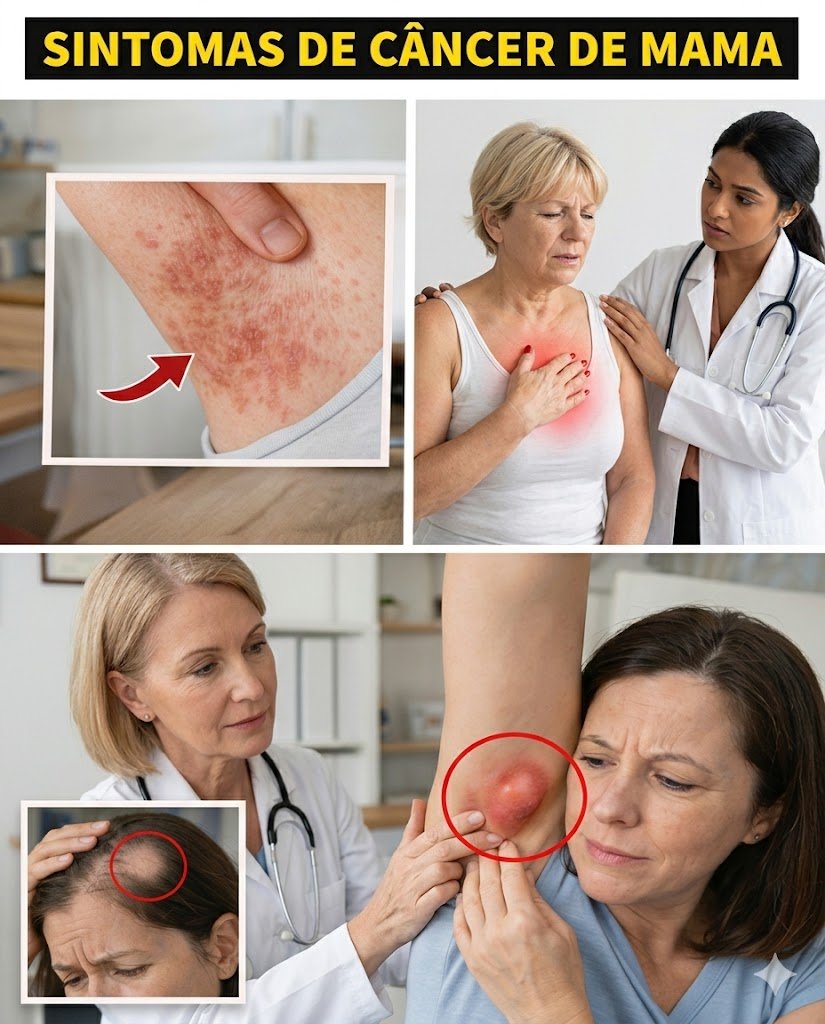
The 10 Key Warning Signs
Here are the most important symptoms you should never ignore:
1. A New Lump in the Breast or Underarm
Often hard with irregular edges, but sometimes soft or tender. Any new lump that persists needs medical evaluation.
2. Thickening or Swelling in One Area
Even without a distinct lump, part of the breast may feel denser or swollen.
3. Skin Dimpling or Orange-Peel Texture
If the skin puckers or resembles orange peel (peau d’orange), it may indicate underlying tissue changes.
But that’s not all—some warning signs are even more subtle.
4. Redness, Flaky, or Thickened Skin
Irritated skin on the breast or nipple that looks like eczema can signal a serious condition.
5. Nipple Retraction or Sudden Inversion
If a previously outward nipple turns inward or flattens, take note.
6. Unusual Nipple Discharge
Clear or bloody discharge not related to breastfeeding is a red flag.
7. Persistent Breast or Nipple Pain
Most breast cancers are painless at first, but ongoing localized pain should be checked.
8. Changes in Size or Shape
Unexplained enlargement, shrinking, or asymmetry may be an early clue.
9. Swollen Lymph Nodes
Swelling under the arm or near the collarbone can occur even before a breast lump is felt.
10. Warmth, Itching, or Ongoing Irritation
A breast that feels unusually warm or inflamed may indicate inflammatory breast cancer, a rare but aggressive type.
Normal vs. Concerning Changes
Some changes are common: cyclical tenderness, soft movable cysts, or hormonal shifts during menopause or pregnancy.
More concerning signs include: hard fixed lumps, persistent one-sided pain, skin dimpling that doesn’t smooth out, and bloody discharge.
How to Perform a Simple Self-Exam
Perform this monthly, ideally a few days after your period ends:
-
Look in the Mirror – Arms at sides, raised overhead, then hands on hips. Check for dimpling, swelling, or nipple changes.
-
Feel Lying Down – Use flat fingers in circular motions, covering from collarbone to underarm and down to the ribcage.
-
Feel in the Shower – Soapy hands help glide smoothly.
-
Gently Check the Nipples – Lightly squeeze to check for discharge.
Taking monthly photos can help you detect gradual changes.
What to Do If You Notice Changes
Do not wait. Schedule a medical appointment promptly. Your provider may recommend a clinical exam, imaging tests like a mammogram or ultrasound, and possibly a biopsy if needed. Acting early often means more treatment options and better outcomes.
Final Thoughts
Your body speaks quietly before it screams. Listening to subtle changes gives you control and peace of mind. Regular screenings, especially starting around age 40 (or earlier if you have risk factors), combined with self-awareness, save lives.
You are not overreacting by getting checked—you are protecting your future.