 By admin
 Tired of bloating and that “stuck” feeling? This could change your digestion for good.
Have you ever finished a completely normal meal, leaned back to relax… and suddenly felt a burning sensation rising from your chest into your throat?
Maybe you’ve brushed it off as “just heartburn.”
Maybe you’ve blamed stress.
Maybe you’ve told yourself, “It’s just part of getting older.”
But what if your body is trying to tell you something more?
Hiatal hernias become increasingly common with age, and many people live with subtle symptoms for years without connecting the dots. The good news? Awareness is powerful. Small adjustments can dramatically improve comfort and prevent long-term irritation.
Before reading further, pause and rate your digestive comfort after meals from 1–10. Frequent burning, bloating, pressure, or that “stuck” feeling? Don’t ignore it.
Let’s uncover 10 surprising signs of a hiatal hernia — and what they may mean for you.
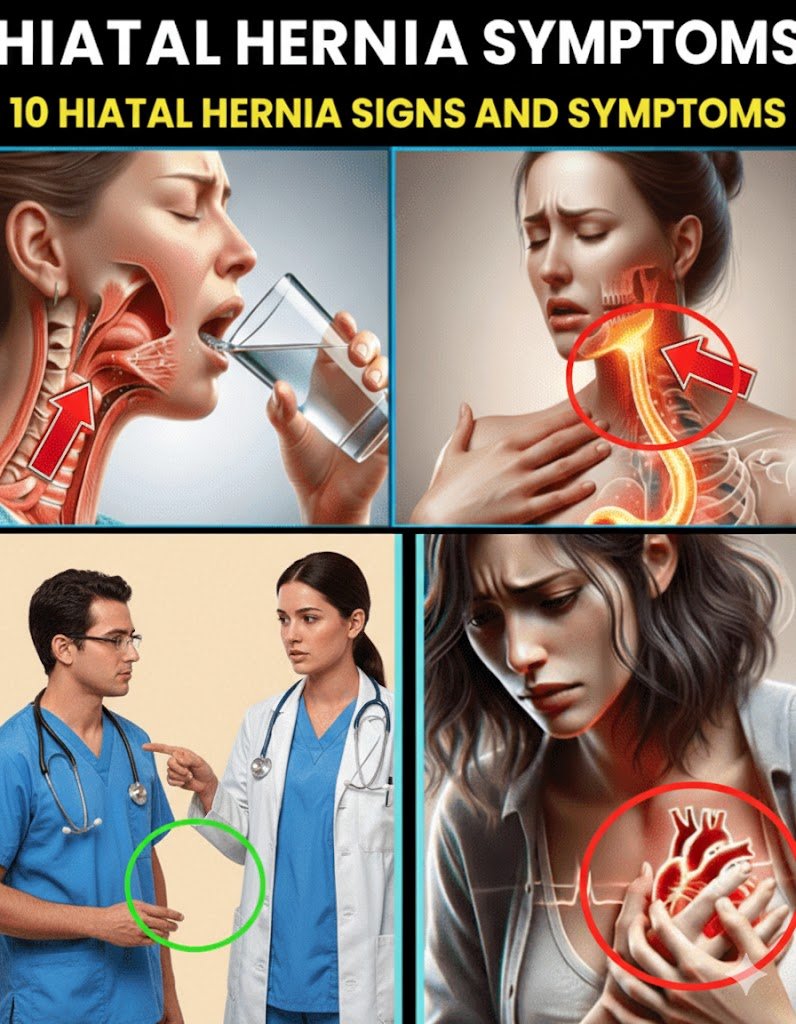
1. Persistent Heartburn After Meals
That burning sensation behind your breastbone that worsens when lying down is one of the most common signs.
A hiatal hernia can weaken the natural barrier between the stomach and esophagus, allowing acid to rise more easily — especially after large meals or trigger foods like spicy dishes or caffeine.
If heartburn is frequent rather than occasional, it deserves attention.
2. Sour or Bitter Taste in the Mouth
Do you wake up with a metallic or acidic taste? That’s acid reflux reaching the throat.
When this happens regularly, it can irritate delicate tissues and affect long-term throat health. Late-night eating often makes it worse.
3. Regurgitation of Food or Liquid
Food or liquid coming back into the mouth without nausea can feel alarming and embarrassing.
This occurs when stomach contents flow upward more easily due to structural changes. Frequent regurgitation can also affect dental enamel over time.
4. Difficulty Swallowing (Dysphagia)
Does food sometimes feel like it’s “stuck” in your chest?
This sensation may start with solid foods and gradually worsen. It can be caused by pressure changes or inflammation in the esophagus.
If swallowing becomes consistently difficult, medical evaluation is important.
5. Chest or Upper Abdominal Pain
Hiatal hernia discomfort can mimic heart-related pain — a burning, pressure-like sensation in the chest.
Important: Any new or severe chest pain should always be evaluated urgently to rule out cardiac causes.
6. Feeling Full Too Quickly
Do you feel satisfied after only a few bites?
When part of the stomach shifts upward, its functional capacity can feel reduced, leading to early satiety and even unintended weight changes.
7. Bloating and Excessive Belching
A tight, balloon-like abdomen after meals may signal trapped air and pressure changes in the upper stomach.
Carbonated drinks and rapid eating often worsen this symptom.
8. Chronic Hoarseness or Sore Throat
Morning hoarseness or frequent throat clearing can be a sign of “silent reflux,” where acid irritates the voice box without obvious heartburn.
9. Shortness of Breath (In Larger Hernias)
In more significant cases, part of the stomach may press upward enough to affect breathing, especially after eating or when lying flat.
This symptom requires medical assessment.
10. Vomiting Blood or Black Stools
These are serious warning signs of bleeding and require immediate medical care. Never ignore them.
Why Early Recognition Matters
Untreated acid exposure can inflame the esophagus over time. Chronic irritation may lead to narrowing, ulcers, or more serious complications.
Many people rely only on quick-fix antacids, but long-term comfort often comes from consistent lifestyle adjustments.
Simple Daily Adjustments That Help
• Eat 5–6 small meals instead of 3 large ones
• Avoid lying down for at least 3 hours after eating
• Elevate the head of your bed 6–8 inches
• Maintain a healthy weight
• Avoid tight clothing around the waist
• Limit trigger foods (fried foods, citrus, tomato sauces, caffeine, alcohol)
Gentler options often include bananas, melons, lean proteins, steamed vegetables, oatmeal, and herbal teas.
Imagine 30 Days From Now
Picture finishing dinner without burning.
Sleeping through the night without waking from reflux.
Enjoying meals without fear or discomfort.
Small changes, done consistently, can create powerful shifts.
Start with one adjustment today — perhaps earlier dinners or smaller portions. Track your symptoms in a simple notebook. Patterns appear quickly, and awareness becomes your strongest tool.
And remember: if symptoms are persistent, severe, or worsening, consult a healthcare professional for proper evaluation.
Your body speaks in whispers before it shouts.
Are you listening?