 By admin
 ❗”If you’ve had headaches, balance issues, or speech slips lately—read this BEFORE you write them off as ‘just aging.’”
Do you sometimes brush off strange headaches, speech slips, or balance issues as “just stress” or aging?
You’re not alone—but doing so might cost you your life.
Each year, nearly 90,000 Americans are diagnosed with brain tumors—yet many don’t realize it until the tumor has grown large and symptoms become severe. Why? Because the earliest signs are so subtle, they often go unnoticed for months.
Let’s change that. If you’re over 40 or have a family history of cancer, pay close attention to these 8 early warning signs. Catching them early could mean the difference between a simple surgery and a life-altering battle.
Stick with me to the end—I’ll show you exactly what to track and say to your doctor to ensure you’re taken seriously.
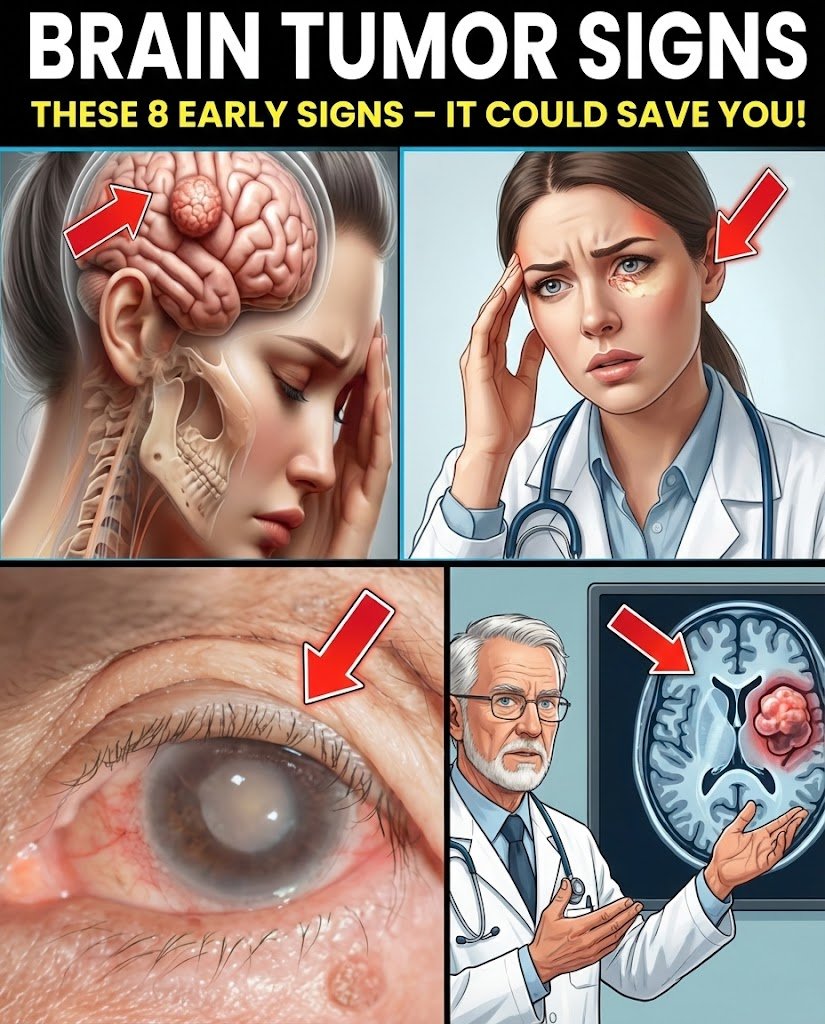
Why Brain Tumor Symptoms Are So Easy to Miss
The brain doesn’t scream—it whispers. Early tumor symptoms often look like everyday issues: tension headaches, forgetfulness, or fatigue. But these aren’t “normal” when they persist or come with other neurological changes.
Tumors grow inside a closed skull. As pressure builds, the brain tries to adapt. That’s why symptoms vary so much—they depend on the tumor’s size, speed, and location. Many people experience subtle symptoms for 6–12 months before diagnosis, often dismissed by both patients and doctors.
So let’s dive into the 8 early signs that your brain may be quietly asking for help.
The 8 Subtle Signs of a Brain Tumor
1. New or Changing Headaches
Headaches that feel different—more intense in the morning, worse when lying down, or resistant to usual medications—can be caused by increased pressure from a growing tumor.
2. Speech or Language Difficulties
Struggling to find words, forming jumbled sentences, or needing to repeat yourself may be early signs of a tumor affecting the brain’s language center.
3. New-Onset Seizures in Adulthood
Any seizure after age 40 is a red flag. Even minor twitching, odd smells, or sensations can signal a tumor irritating brain tissue.
4. Vision Changes
Blurry or double vision, loss of peripheral sight, or flashes of light may mean a tumor is pressing on visual pathways.
5. Numbness or Weakness
Feeling numb or weak—especially on one side—or unsteadiness when walking could indicate a tumor affecting motor nerves or balance centers.
6. Personality or Behavior Shifts
Irritability, impulsivity, or emotional flatness may point to a frontal lobe tumor. Family often notices these before the person does.
7. Cognitive Problems
Struggling to concentrate, remember things, or plan could mean the brain’s executive functions are under pressure from a tumor.
8. Constant Fatigue or Morning Nausea
Feeling drained every day or waking up nauseated may reflect increased brain pressure or tumor-related chemical changes.
Why Multiple Symptoms Matter More Than One
One sign alone might not be enough to worry—but two or more that persist for weeks? That’s your cue to act.
Track your symptoms for 2 weeks—note timing, triggers, and severity. If you see a pattern, don’t wait. Call your doctor and request an MRI or neurological evaluation.
Real Story: Rachel’s Wake-Up Call
Rachel, 47, thought her headaches and word slips were due to stress and hormones. When she started dropping things and feeling off-balance, she insisted on imaging. The result? A benign tumor caught early—and removed before it became dangerous.
Early action saved her life.
Take Charge Today
🧠 Start a simple note on your phone.
✅ Log symptoms daily for 2 weeks.
📞 Call your doctor if 2+ signs persist.
🧪 Request an MRI—not just a check-up.
Most importantly: Trust your instincts. You know your body best.
This article is for informational purposes only and does not replace medical advice. If you’re experiencing persistent neurological symptoms, speak with a healthcare provider. Early action saves lives.