 By admin
 “The first sign of heart trouble might be in your toes, not your chest.”
Do your legs ever feel heavy, numb, or just not as strong as they used to? Maybe you’ve blamed it on age or fatigue—but what if your legs are quietly signaling a serious circulation problem?
Blocked arteries in the legs, or Peripheral Artery Disease (PAD), affect millions—yet most people don’t realize it until it’s too late. PAD doesn’t just cause leg pain; it dramatically increases your risk of heart attack, stroke, and even amputation.
If you’re over 40, this is your body whispering warnings you can’t afford to ignore. Read to the end—we’ll uncover the 7 key warning signs, what causes them, and what to do next.
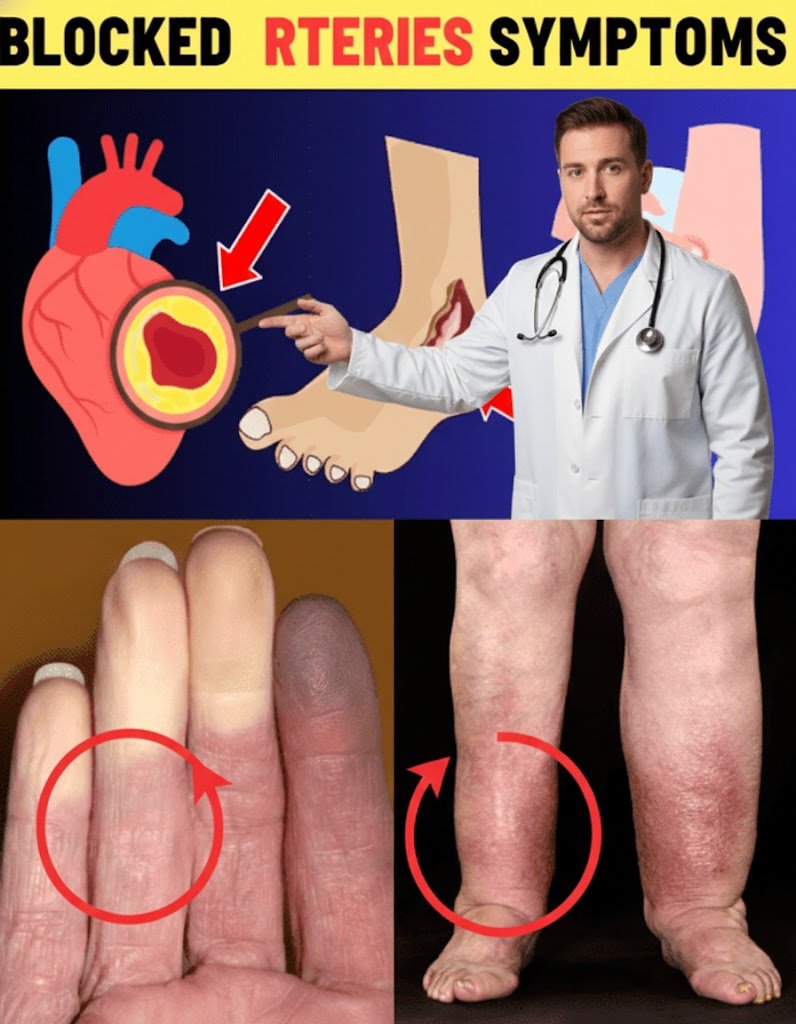
Why PAD Often Goes Unnoticed
As we age, changes in our bodies become easy to overlook. When walking becomes uncomfortable or your feet feel cold all the time, most people assume it’s just aging or arthritis. But PAD restricts blood flow, slowly starving your leg muscles and nerves. Left untreated, it can turn small issues—like a blister or fatigue—into dangerous complications.
So, how do you know if your arteries are quietly clogging? Here are the most critical signs:
1. Pain When Walking That Goes Away With Rest (Intermittent Claudication)
If walking causes a sharp cramp or burning pain in your calf, thigh, or hip that eases with rest, this is a classic PAD symptom. It happens because narrowed arteries can’t deliver enough oxygen-rich blood during activity.
💡 Pay attention: If your walking endurance is dropping and pain follows a “walk-stop-walk” cycle, it’s time to get checked.
2. Weak or Missing Pulse in Legs and Feet
Doctors often check pulses behind the knee and on top of the foot. If your pulse is weak or absent, it can indicate serious blockages—even before pain starts. This can be a silent but urgent sign of PAD.
3. Changes in Skin Color or Temperature
Look at both legs. Does one seem paler, bluish, or feel cooler than the other? Poor circulation can leave one leg looking or feeling very different. This is a warning that tissues aren’t getting enough oxygen.
4. Wounds That Heal Slowly or Not at All
Even small cuts or blisters that won’t close after 2–3 weeks are a danger sign. PAD slows healing by depriving tissues of nutrients and immune support, often leading to infections.
🔴 Especially for diabetics: The risk of amputation increases significantly if wounds go untreated.
5. Smooth, Shiny, or Hairless Skin on Legs
If your legs below the knees suddenly lose hair or the skin becomes unnaturally shiny, it may not just be a cosmetic change. Poor blood flow can damage hair follicles and skin tissue.
6. Erectile Dysfunction in Men
Blocked arteries can first show up in the smallest vessels—like those supplying the penis. Many men with PAD experience erectile dysfunction years before leg symptoms. Don’t dismiss this as “just aging”—it could be your first vascular red flag.
7. Numbness, Tingling, or Weakness in Legs
Do your legs feel “asleep,” tingly, or unusually weak? These sensations can be signs of nerve damage due to poor circulation. In advanced PAD, this can progress to muscle loss or difficulty walking.
Take Action Before It’s Too Late
PAD is not just a leg issue—it’s a sign of widespread artery disease. The risks go beyond pain: your heart and brain may be next if you ignore the signs.
But here’s the good news: early detection and lifestyle changes can reverse or halt PAD progression. Simple steps like daily walking, quitting smoking, and eating a heart-healthy diet can improve circulation naturally.
➡️ One simple test can save your future: Ask your doctor for an Ankle-Brachial Index (ABI). It’s quick, painless, and highly effective at spotting PAD early.
🦶 Don’t wait for a major health crisis. Listen to your legs—they’re trying to protect you.